WHO WAS SILVIO GESELL?
The Genius Who Inspired the Creation of the Bitgesell Cryptocurrency

Bitgesell News
May 30, 2025
Silvio Gesell was an economist whose groundbreaking ideas could have completely transformed the global financial system. Over a century ago, he proposed a concept that remains radical even today: money that loses value over time. Instead of rewarding hoarding and accumulation, this system would encourage constant circulation and economic activity. As financial instability continues to challenge economies around the world, Gesell’s vision is finding renewed relevance.
A Self-Taught Visionary
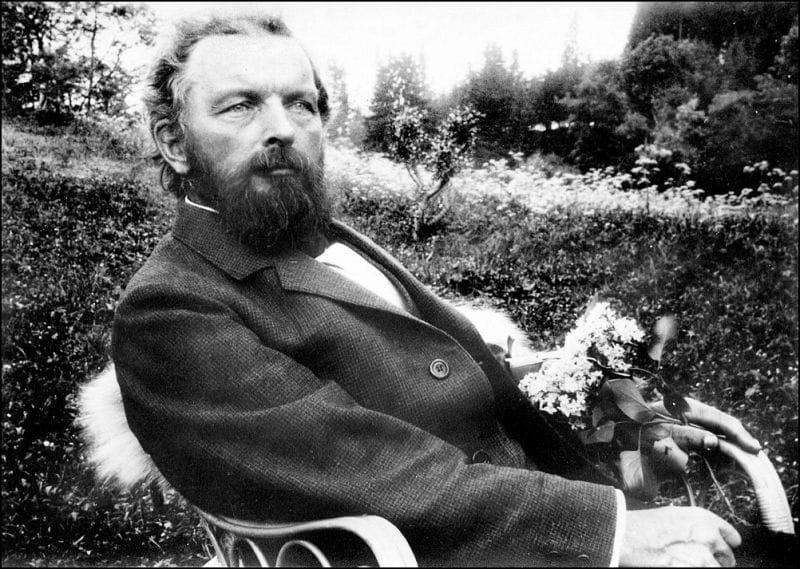
Born in 1862 in Freiburg, Germany, Silvio Gesell was the son of a German father and French mother. At the age of 24, he moved to Argentina to represent his brother’s business. It was there, amid the volatile economy of late 19th-century Latin America, that Gesell began to observe the flaws of the financial system firsthand.
Despite lacking formal academic training in economics, Gesell studied independently and critically. His observations during economic crises in Argentina led him to a profound conclusion: the design of the monetary system itself was responsible for poverty and inequality.
Challenging Both Capitalism and Socialism
Gesell wasn’t content with simply pointing out the problems. He found the traditional economic theories of capitalism and socialism equally flawed. Instead, he forged his own path—developing a unique framework for a more just and functional economy.
At the heart of Gesell’s theory was a revolutionary idea: “Freigeld,” or “free money.” Unlike traditional currencies, Freigeld would decay in value over time unless it was spent or "renewed" through a fee. In his words, money should "rot like potatoes and rust like iron." This would discourage hoarding and ensure constant movement of money within the economy.
Money Shouldn’t Be a Store of Value
According to Gesell, one of the fundamental flaws of modern currency is its dual role as both a medium of exchange and a store of value. When money is saved instead of spent, it exits circulation, slowing down economic activity and leading to crises. By eliminating its store-of-value function, Gesell believed money could better fulfill its role in driving commerce and prosperity.
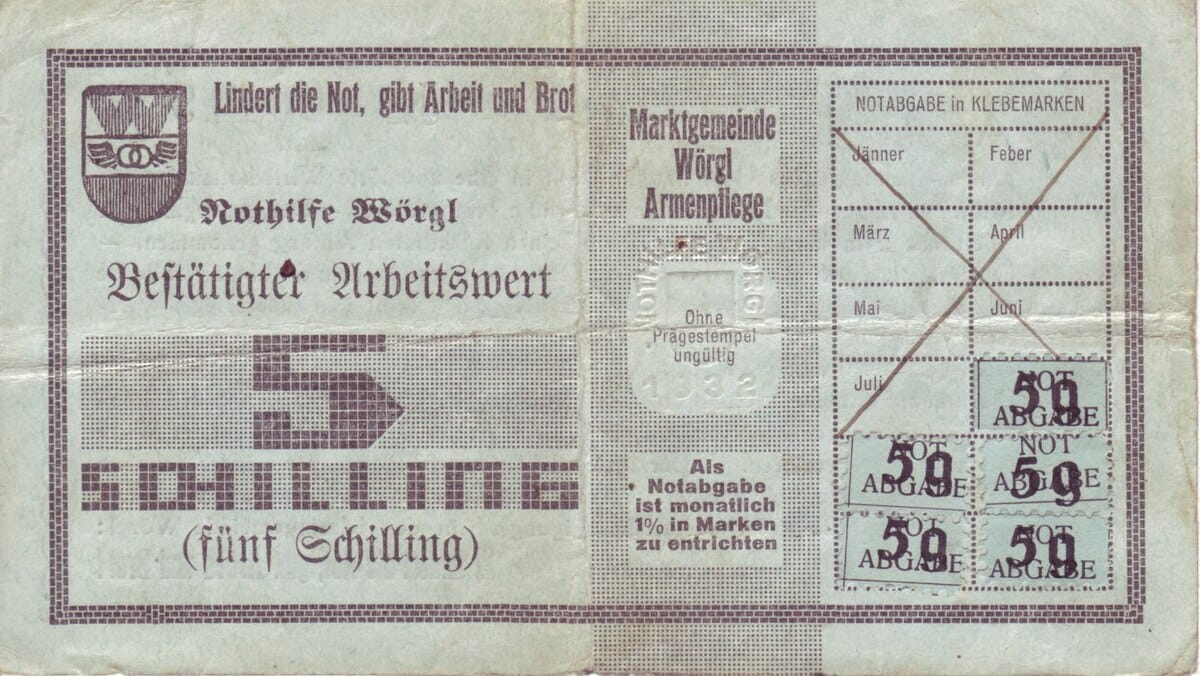
To put his theory into practice, Gesell proposed a currency with an expiration date—money that would require periodic renewal through the payment of a small fee. This mechanism would prevent hoarding and incentivize spending, ensuring a dynamic and inclusive economy.
The Wörgl Experiment: A Real-World Test
In 1932, during the depths of the Great Depression, Gesell’s ideas were put to the test in Wörgl, Austria. Mayor Michael Unterguggenberger introduced a local currency that required users to buy and affix stamps to keep the money valid. The result? A sharp drop in unemployment, thriving infrastructure projects, and a revived local economy. The phenomenon became known as the “Miracle of Wörgl.”
Despite its success, the Austrian National Bank shut down the experiment, citing legal concerns. Yet the impact of Wörgl echoed worldwide, and Gesell’s theories began to influence major economists such as Irving Fisher and John Maynard Keynes, both of whom acknowledged the innovative nature of his work.
Land and the Origins of Inequality
Gesell didn’t stop at money. He also targeted land ownership as a root cause of economic injustice. He believed land should be treated as a common good, not private property, since it wasn’t created by human labor. In his view, wealth accumulated through land ownership and interest-bearing money created unearned income—wealth gained without contributing value to society.
This system, he argued, entrenched inequality by allowing a small elite to grow richer without producing anything, while the working class remained excluded from the wealth they helped create.
The Legacy Lives On
After World War II, Gesell’s ideas faded into obscurity as new monetary frameworks took hold. But as modern economies struggle with stagnation, inflation, and wealth inequality, his theories are resurfacing. Concepts like negative interest rates, introduced by central banks to stimulate spending, are modern echoes of Gesell’s vision. However, these measures only partially reflect his more radical proposition of a currency intrinsically designed to circulate.
Gesell’s influence can also be felt in modern alternative economic models and even in certain cryptocurrencies—projects that aim to disrupt the traditional role of money and encourage more equitable financial ecosystems.
Bitgesell: A Modern Tribute
Silvio Gesell dreamed of a system in which money would promote prosperity for all—not just the wealthy few. Today, that dream is finding new life in projects like Bitgesell, a deflationary cryptocurrency inspired by his principles./
Could Gesell’s vision of money that decays rather than accumulates provide the balance we need in the 21st century?
That, dear reader, is a story we’ll explore in our next issue.
Reply